If silk is the soul of Banaras, zari is its sparkle. The shimmering metallic thread, woven into silk fabrics, is what transforms an ordinary drape into a regal masterpiece. From Mughal courts to modern wedding mandaps, zari has been at the heart of Banarasi weaving, giving it that unmistakable glow.
What is Zari?
Traditionally, zari is a thread made of fine silver wire coated with gold — known as kalabattu. These threads are drawn out into hair-thin wires (a craft called taarkashi), flattened, and then wound around silk yarn. When woven into sarees, they create shimmering motifs, borders, and brocades that catch the light like liquid gold.
✨ Fun fact: A Banarasi saree with real zari was once considered a form of wealth — treasured like gold jewellery and passed down as a family heirloom.
Real Zari – The Original Luxury
Until a few decades ago, all Banarasi sarees were woven with real zari. Made from pure silver plated with gold, these sarees were heavy, opulent, and extremely expensive. A genuine real zari Banarasi saree could cost several lakhs, depending on the intricacy of the design and the purity of the metal used.
Today, real zari weaving has become rare because of cost and labour. Most sarees now use tested or imitation zari, but Khinkhwab is one of the few brands that still offers authentic real zari Banarasis through our Khinkhwab Gold Collection.
✨ Price point: A true real zari Banarasi saree can start from INR 1.5 – 2 lakhs and go up depending on the weave, motifs, and zari weight — making it a true investment piece and heirloom.
From Real Gold to Modern Adaptations
Because of accessibility, most Banarasi sarees today use tested zari (silver plated with gold alloy) or imitation zari (metallic/polyester threads). While lighter and more affordable, they still retain the shimmer that makes Banarasi iconic. But nothing matches the depth and glow of real zari.
The Role of Zari in Banarasi Weaving
Banarasi sarees are defined by their zari. Whether it's delicate buttas sprinkled across the body, wide Mughal-inspired borders, or bold shikargah motifs depicting royal hunts, zari is the thread that tells stories. Sarees like Jangla, Cutwork, Tanchoi, and Tissue owe their magnificence to zari.
Zari Through the Ages
During the Mughal period, zari was a symbol of royalty. Queens adorned themselves with Katan Banarasis shimmering with gold zari, while emperors wore brocaded robes that glittered under candlelight. Even today, Indian brides across the world choose zari-rich Banarasis because nothing says heritage and luxury quite like it.
Celebrities from Vidya Balan to Rekha have made zari Banarasis their signature look, proving that this ancient thread never goes out of style.
Khinkhwab's Zari Masterpieces
At Khinkhwab, zari is at the heart of our artistry:
- 🌟 Khinkhwab Gold Collection – authentic real zari Banarasi sarees, woven as they were centuries ago.
- 🌿 Shikargah Sarees – storytelling in zari, with hunting scenes and Mughal gardens.
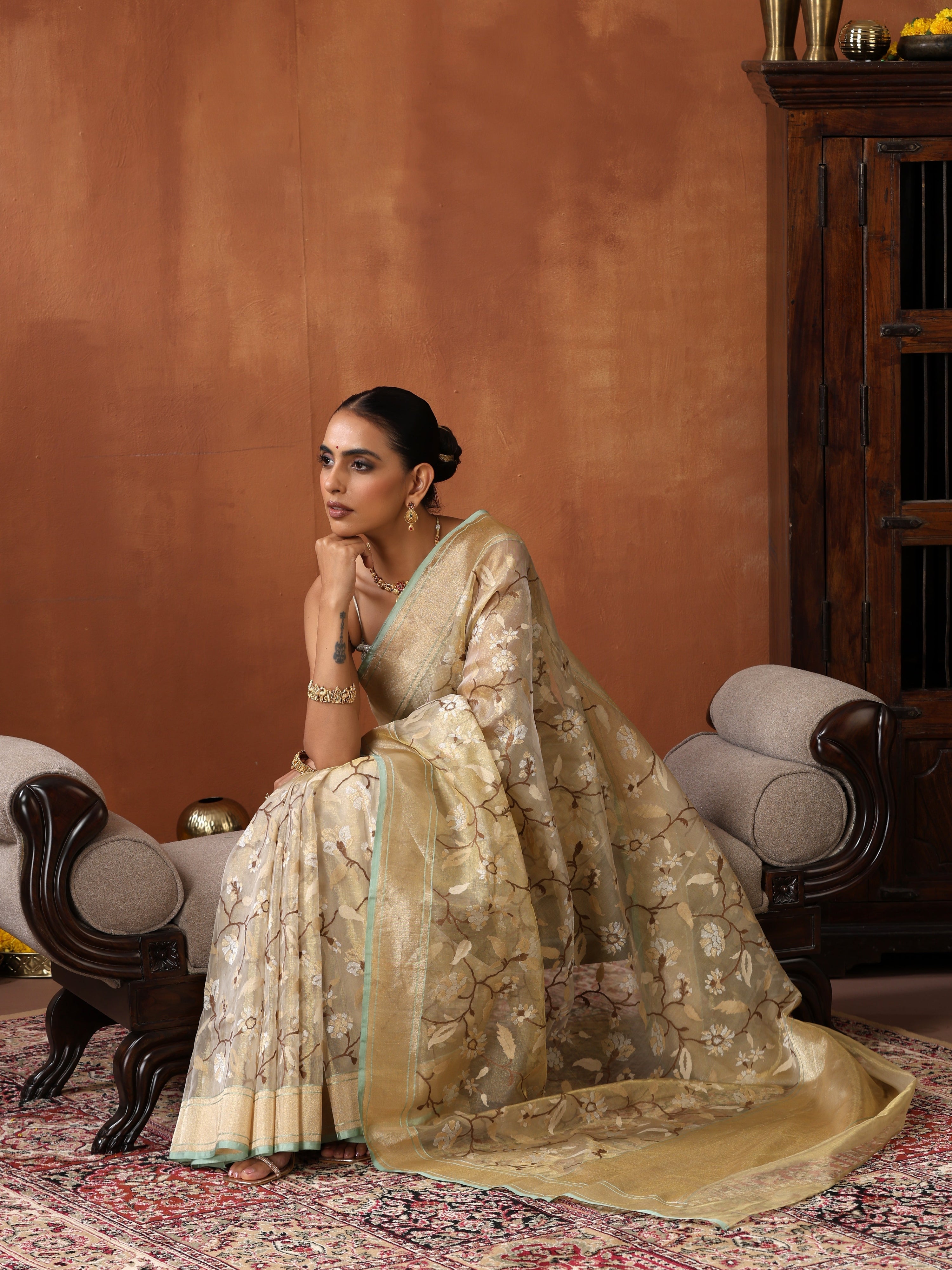
- 🌙 Tissue Banarasis – zari woven into silk, creating molten sunlight or moonlight shimmer.
Explore the radiance of zari here: Khinkhwab Gold Collection.
Closing Thought
Zari is more than just a metallic thread — it is the golden heartbeat of Banarasi weaving. Whether it glitters in a bridal Katan, gleams in a Shikargah saree, or shimmers in a delicate dupatta, zari ensures that Banarasi sarees will always glow with timeless royalty.
Frequently Asked Questions About Zari
What is zari thread made of?
Zari is made from fine silver wire coated with gold — known as kalabattu. The silver is drawn into hair-thin wires through a process called taarkashi, then flattened and wound around a silk yarn base. This creates the metallic thread that is woven into Banarasi sarees to create shimmering motifs, borders and brocades.
What is the difference between real zari and tested zari?
Real zari (also called pure zari or asli zari) is made from genuine silver plated with gold, and is extremely expensive. Tested zari contains a small percentage of silver and is more affordable. Imitation zari uses copper wire coated with gold-coloured lacquer — it tarnishes over time. Khinkhwab's Khinkhwab Gold collection uses authentic real silver zari.
How can I tell if a Banarasi saree has real zari?
The simplest test: lightly burn a loose thread from the border. Real zari will not produce a sharp chemical smell and will leave a metallic residue. Imitation zari burns like plastic and leaves an ash residue. You can also rub the zari against your palm — real zari stays shiny while imitation zari may leave a colour mark.
Does real zari tarnish over time?
Pure silver zari can oxidise slightly over decades — but this is a sign of authenticity, not deterioration. Unlike imitation zari which peels and fades, real zari develops a warm antique patina over time. Store your zari saree in a muslin cloth, away from moisture and direct light.
Which Banarasi sarees have the most zari work?
Kinkhab (or kimkhab) brocade sarees have the most intensive zari work — the silk base is barely visible under the dense metallic weave. Tissue silk sarees are also heavily zari-woven. Katan silk sarees in jangla and shikargah weaves also feature extensive zari motifs.


