

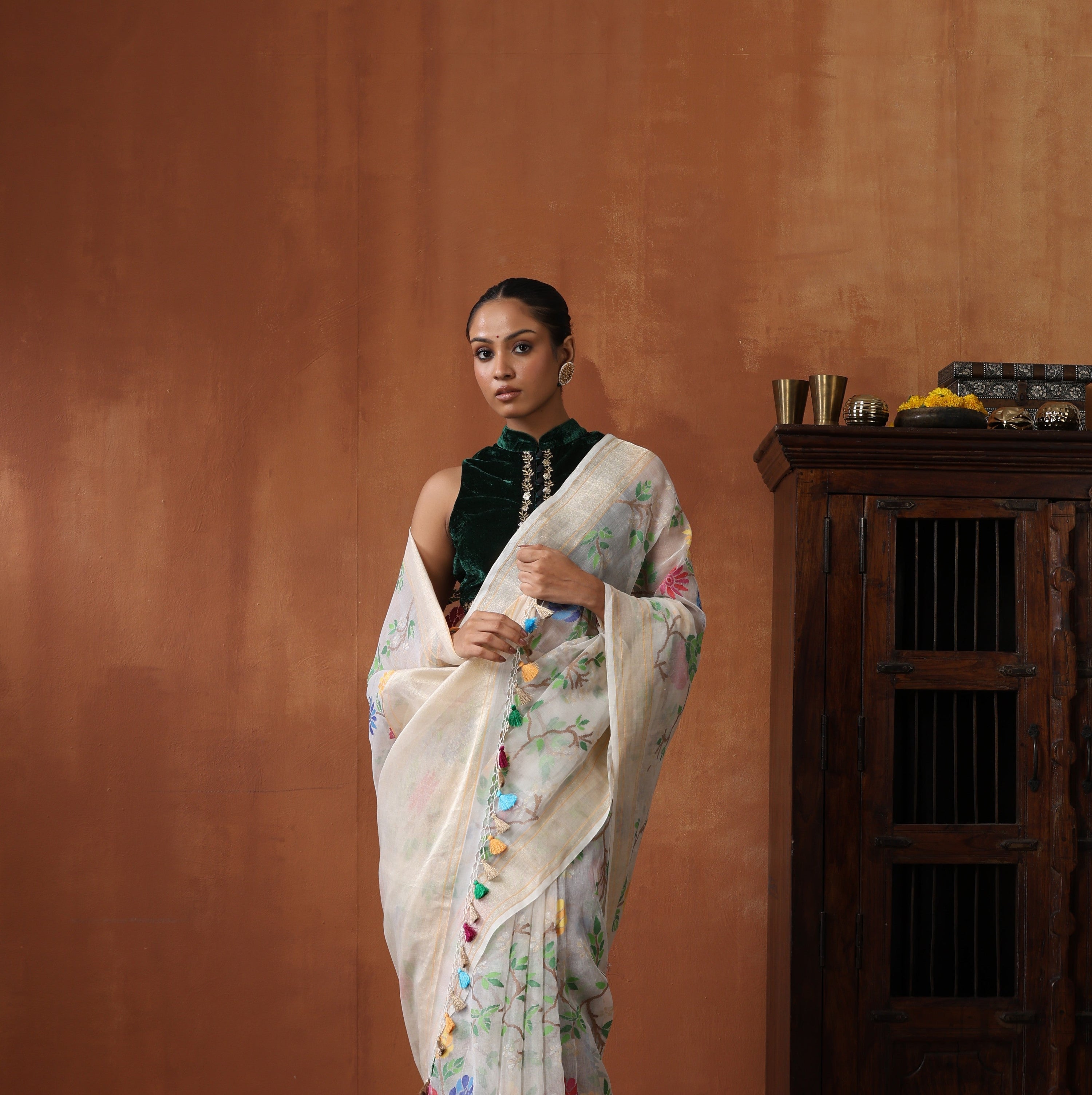
When people think of Banarasi sarees, their mind often jumps to rich Katan silk or shimmering zari brocades. But behind the grandeur lies a set of humble, hardworking fibres that have silently shaped the Banarasi weaving tradition: Matka, Spun Silk, and Suta. Though less celebrated than mulberry silk, these yarns bring their own charm and versatility to the loom.
Matka Silk – Rustic Elegance
Matka silk is made from the waste cocoons of mulberry or tussar silk. Unlike reeled silk, which is smooth and continuous, matka is spun by hand, resulting in a slightly coarse, slubby texture. Far from being a flaw, this irregularity gives matka silk its unique character.
A Matka Banarasi saree has an understated elegance — less sheen than Katan but more depth and personality. Its texture pairs beautifully with zari borders or woven motifs, making it a favourite among women who appreciate sustainable, organic luxury.
✨ Fun fact: Matka silk has been called the "linen of silks" because of its textured look and breathable feel, perfect for summer drapes.
Spun Silk (Staple Silk) – Modern Adaptability
Spun silk, also known as staple silk, is made by spinning short silk fibres from pierced or broken cocoons. The result is a smoother yarn than matka but less lustrous than pure reeled silk. It provides an affordable alternative to pure Banarasi silk sarees, making it ideal for daily wear or lighter festive wear.
✨ Fun fact: Spun silk has a slightly matte finish, which makes it popular today in minimalist fashion sarees and dupattas.

Suta – The Cotton Thread of Banaras
Suta, the Hindi word for thread, refers to cotton yarn that is still widely used in Banarasi weaving. Cotton threads are often blended with silk or zari to create floral motifs, borders, or lightweight sarees. A cotton-silk Banarasi saree feels airy, graceful, and versatile — perfect for work events, small gatherings, or day festivals.
✨ Fun fact: Some of the earliest Banarasi sarees were woven in cotton before silk brocades became dominant.

Closing Thought
The story of Banaras is incomplete without Matka, Spun Silk, and Suta. They prove that in the world of Banarasi weaving, even the humblest threads can create timeless sarees, dupattas, and fabrics that women cherish across generations.
Frequently Asked Questions About Matka Silk
What is matka silk?
Matka silk is made from waste cocoons of mulberry or tussar silk, spun by hand rather than reeled continuously. This produces a slightly slubby, textured yarn. Far from being a flaw, this gives matka its distinctive earthy character — it has been called the "linen of silks" for its breathable, organic feel.
Is matka silk expensive?
Matka silk is significantly more affordable than pure katan silk because it uses short, waste fibres rather than continuous reeled silk. This makes it an excellent choice for women who want an authentic handloom Banarasi saree at a more accessible price point.
What is the difference between spun silk and pure silk?
Pure silk (katan) is made from continuous reeled filaments — smooth, lustrous and strong. Spun silk is made by spinning shorter, broken fibres. It is softer and more matte in finish, less lustrous but also less expensive. Spun silk is ideal for everyday wear where the drama of pure katan would be too much.
What is suta in Banarasi weaving?
Suta is the Hindi word for cotton thread. In Banarasi weaving, cotton threads are blended with silk or zari to create lightweight sarees, dupattas and fabrics. Cotton-silk Banarasis are breathable, affordable and perfect for warm climates — offering the elegance of Banarasi craft without the weight of pure silk.
Are matka silk sarees good for summer?
Yes — matka's textured, slightly looser weave makes it more breathable than tightly woven katan. It drapes beautifully in summer and is a popular choice for day events, office wear, and casual festive occasions where a lighter silk is preferred.


